Is PTE marked by AI? How PTE scoring and human review work
Most PTE scoring is completed by an automated system
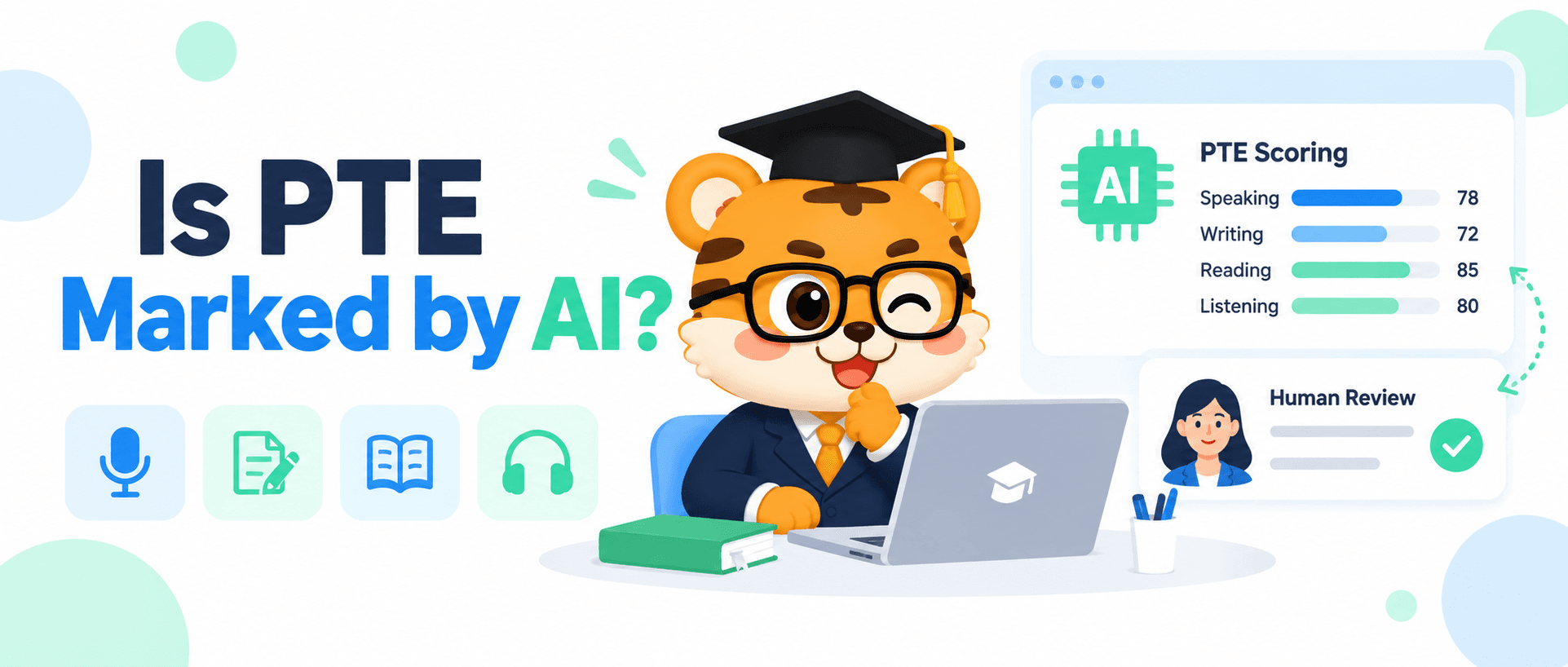
Many candidates ask, “Is PTE marked by AI?” because they worry that a computer will not understand their accent. PTE Academic is taken on a computer, and answers from Speaking, Writing, Reading, and Listening are processed by an automated scoring system. The system checks different signals according to the task, including content, pronunciation, oral fluency, grammar, spelling, and response format. Read Aloud focuses on how accurately and clearly you read the text, while an essay also involves content, structure, language use, and length. This is not a chatbot giving a personal opinion about your English.
Automated scoring measures observable performance
The scoring system works with many details from your response. In speaking tasks, unclear sounds, long pauses, missing words, and broken rhythm can affect the result. In writing, an answer that moves away from the prompt, has weak paragraph control, or contains many spelling and grammar errors can lose points. Reading and Listening tasks use their own answer rules for choices, blanks, and ordering. Some tasks also contribute to more than one skill score. Having an accent does not automatically mean a low score. Clear speech and steady delivery are usually more useful than trying to copy a particular native accent.
Some responses may go through human review
AI scoring does not mean that no person is involved in the full testing process. A response may receive additional review when the system needs a quality check, or when an unusual testing signal needs to be investigated. Human review can be part of score quality control and test security. It may involve the recording quality, test rules, identity information, or unusual behaviour during the appointment. The exact review process, score timing, and policy can change. After booking, follow the current information in your Pearson account and appointment messages.
Human review is not a casual request to raise a score
Some candidates receive a lower result than expected and assume that the AI must have made a mistake. A disappointing score can also come from a missed word, repeated correction, long silence, weak answer content, poor spelling, or running out of time. A human reviewer will not normally increase a score simply because an answer sounded good to the candidate. If you consider a score review or appeal, check the official process, deadline, and fee. Keep your score report and compare the skill scores before deciding what to do.
Templates cannot replace a relevant answer
Templates can help you remember a simple structure, but copying the same long script into every task is risky. It can create irrelevant content, repeated sentences, awkward pauses, and answers that do not match the prompt. Describe Image needs the important information from the image. Retell Lecture needs the points you actually heard. An essay needs to answer the question in front of you. Use a short structure as support, then spend your practice time on listening for keywords, organising ideas, and completing the task. A template supports an answer; it is not a way to trick the scoring system.
Clear and continuous speech should come first
When candidates think about AI marking, they sometimes exaggerate every sound. The result can be slow, disconnected speech. A better practice routine is to produce a complete sentence first and then fix the sounds that cause repeated errors. Record Read Aloud, Repeat Sentence, and Describe Image answers. Listen for long silence, a voice that becomes too quiet at the end, and words that are regularly mispronounced. Short daily practice is useful when it has one clear target. In the test, steady delivery across the whole answer is more valuable than one impressive sentence followed by a breakdown.
Writing and objective tasks also follow scoring rules
Automated scoring is not only about pronunciation. Writing tasks require relevant content, readable sentences, correct spelling, and an organised response. Reading and Listening depend on understanding the material and selecting accurate answers. After practice, look beyond the total score. Identify whether the repeated problem is vocabulary, grammar, missed audio, task interpretation, or time management. YoushowPTE/优秀PTE offers practice for all four skills, AI scoring, task feedback, mock tests, and error review. You can visit the official website at https://pte.youshowedu.com. Use the feedback to choose the next practice target instead of doing random questions for hours.
Check your performance before blaming the system
When a score is far below your expectation, start with the score report and your practice recordings. Check whether you missed an instruction, spoke too quietly, paused for too long, left an item incomplete, or moved away from the writing prompt. If the same issue appears across several practice sessions, your method probably needs adjustment. If you find a clear technical or test-process problem, then look at the current official review channel. Understanding PTE as a rule-based scoring process makes preparation less mysterious. You have specific behaviours to check and improve.

AI-Powered PTE Preparation Journey
YoushowPTE provides AI smart scoring, massive real exam questions, and full mock exam system to help you pinpoint weaknesses, improve scores efficiently, and reach your target score with ease.
- AI Speaking & Writing Real-time Scoring
- High Hit-rate Real Question Bank
- Full Mock Exam Restores Real Test Experience
- Free Sign Up, Start Practicing Now