
Can You Still Pass PTE RA if You Mispronounce Words?
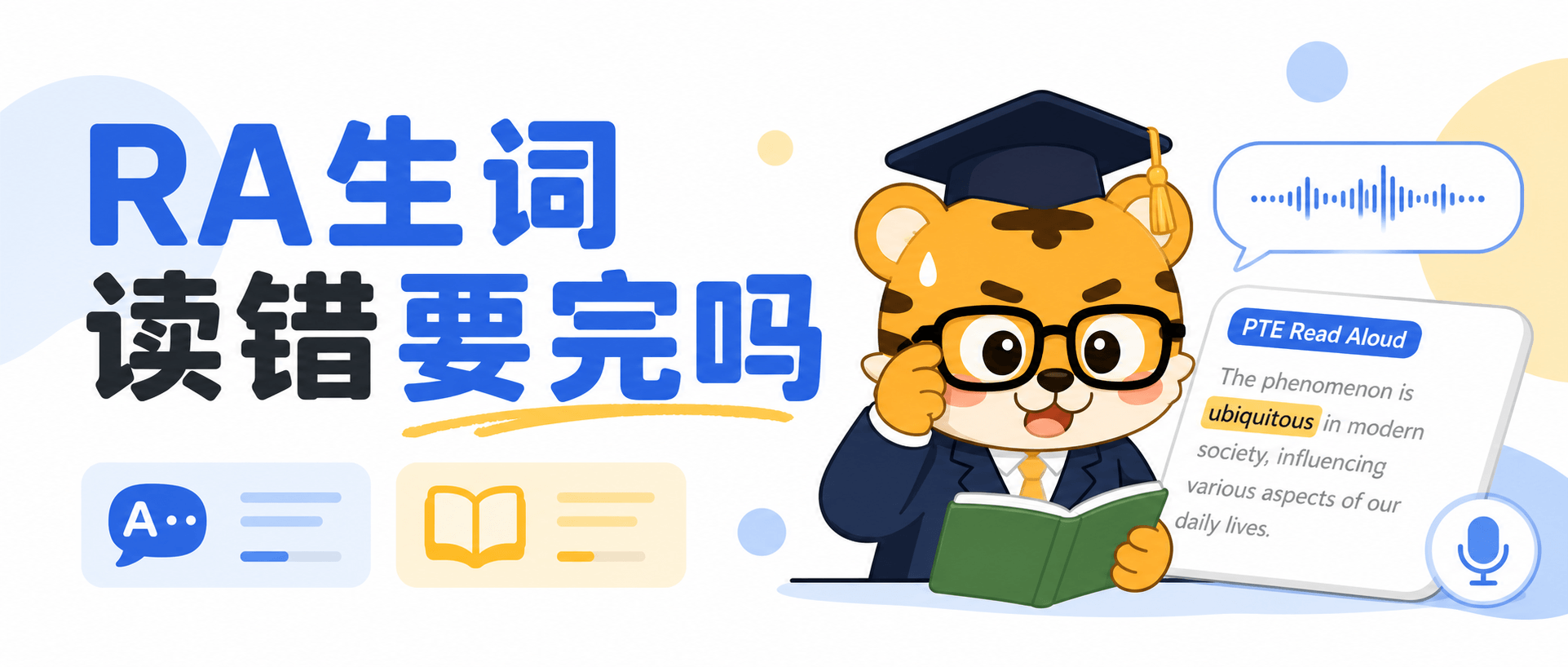
For many people taking the PTE Read Aloud, the biggest fear is a completely unknown word suddenly popping up in a sentence.
Your eyes get stuck. Your mouth pauses for a second. And the rest of the sentence gets jumbled. Some people will repeat the entire sentence after one mistake—wasting time and creating a loop in the recording.
I used to obsess over unknown words too, but after lots of practice, I realized Read Aloud isn't a perfect spelling bee. Even if one word isn't perfect, you can still score well on the rest of the paragraph. If you stop there, you risk dragging down your Fluency and Content scores all at once.
Mispronouncing Words Doesn't Mean You've Failed the Task
RA mainly tests your ability to read the screen content clearly and continuously. Your pronunciation, fluency, and content all affect your performance. When encountering an unknown word, the worst action is usually staring at it for ten seconds and restarting.
For example, with long words like archaeological or names, places, and institutions, it's normal to feel confused the first time you see them. You can attempt a pronunciation based on the word's length and familiar letters, then keep reading once the sound is out.
You can't rely on guessing for unknown words. My approach is to set a short decision time—read it if you can, skip it quickly if you completely don't know how, and don't try to "fix" it in place.
Break Down Long Words by Syllables, Don't Spell Letter by Letter
Many people start spelling a long word letter by letter in their minds. Their mouth is still closed while their eyes scan ahead, leading to panic.
In practice, split long words into two to four parts, starting with the parts you recognize. For internationalization, look for international. For responsibility, focus on the feeling of response. Word endings offer clues too: if you've seen -tion, -ity, -ic, or -al often enough, you won't be lost.
Splitting is not about pausing to read the segments during the exam; it is a helpful tool during training. Write down the words, mark the stress, and read them aloud several times. Eventually, your eyes will split words into blocks naturally, and your mouth won't get stuck as easily.
Use Proper Nouns as Rhythm Blocks
Places, names, universities, and organizations can easily turn RA into a guessing game. You might not be sure how to pronounce Worcester, or encounter a completely unfamiliar Eastern European surname.
When I encounter such words, I treat them as a single sound block in the sentence. If I have a rough idea of the sound, I read it naturally; if not, I rush through it quickly without stressing the word. I still continue to read normal words clearly before and after and maintain the correct pause points.
There's a small detail: don't miss the, of, or in before proper nouns due to tension. Many people only focus on the strange word, accidentally swallowing the short words and prepositions before and after. In scoring, sentence continuity is more important than obsessing over one specific name.
Starting Over Usually Makes Your Result Worse
When you make a mistake the first time, the most common thought is: "Redo it, I can definitely get it right this time."
But the RA recording isn't a reading competition. When you redo it, you often add an extra pause, a repeated beginning, and then rush the rest. You might start with one wrong word, end up skipping a whole sentence, or even not finishing the section.
If only the tail of a word is unclear, just keep going. Only if you've jumbled up lines or skipped a paragraph do you need to immediately adjust your gaze and steady the remaining content. There is no "undo" button in the exam, so accepting minor slips early helps you save the rest of the sentence.
Practice by Collecting "Problematic" Words
Doing a dozen Ras daily by repeating familiar questions might look good on a score, but you'll still get stuck on new words. Start a specific page in your practice log for three types of words: long words you've missed twice, words with no idea how to pronounce, and short words that always make you pause.
Don't just copy the Chinese meaning for each word. Write the phonetics or a readable pronunciation, mark the stress, and read it back in the original sentence. Read it three times that day, and once in five new Ras the next day. Retest after a week to see if you forgot the word itself or got stuck reintegrating it into long sentences.
I also review the recordings, focusing on two things: how long I paused at the unknown word and if I missed any words due to rushing afterward. This audit is quick and helps identify if the issue is pronunciation or panic when facing unexpected words.
Use Youshow PTE to Practice Unknown Word Reflexes
I usually use Youshow PTE to practice Read Aloud. When encountering unknown words, I record once without redoing, then check the text and playback. This shows me if I'm actually stuck on the word itself or if the whole sentence rhythm was unstable before.
Youshow PTE can be downloaded from the Apple App Store or accessed via the official website https://pte.youshowedu.com/en. It is great for daily specific practice and recording reviews. Use the scores just to track progress, don't treat a single result as a formal score.
Start of the Whole Sentence is More Important Than Small Words
Mispronouncing a couple of unknown words doesn't mean you've failed the entire RA task. You need to train yourself to make quick judgments, speak up fast, and maintain sentence rhythm even after errors.
In practice, deliberately leave in some strange words and don't keep rerecording until perfect. Once you can finish the whole sentence even when getting stuck, your mindset will be much steadier when you encounter a weird word in the actual exam.

Put this guide into practice with RA
YoushowPTE provides AI smart scoring, massive real exam questions, and full mock exam system to help you pinpoint weaknesses, improve scores efficiently, and reach your target score with ease.
- AI Speaking & Writing Real-time Scoring
- High Hit-rate Real Question Bank
- Full Mock Exam Restores Real Test Experience
- Free Sign Up, Start Practicing Now